Artificial Ground Freezing
Permafrost underlies nearly 50% of Canada’s landmass, forming a pivotal foundation for both mining operations and northern infrastructure. For decades, the permanently frozen ground has supported critical assets in northern Canada such as mine sites, tailings dams, roads, pipelines, airstrips, hazardous-waste sites, and community housing. Its progressive and accelerated thawing brings extensive consequences across vital facets, including structural integrity, economic viability, and the long-term sustainability of northern development.
Mining operations are not exempt from this threat; frozen tailing dams rely heavily on permafrost for strength and impermeability. Permafrost thawing jeopardizes the stability of these structures, increasing the risk of collapse and the uncontrolled release of tailings into surrounding landscapes and freshwater systems. The challenge is clear, as permafrost continues to thaw under climate change, the threats to infrastructure stability, economic sustainability, and environmental safety will intensify.
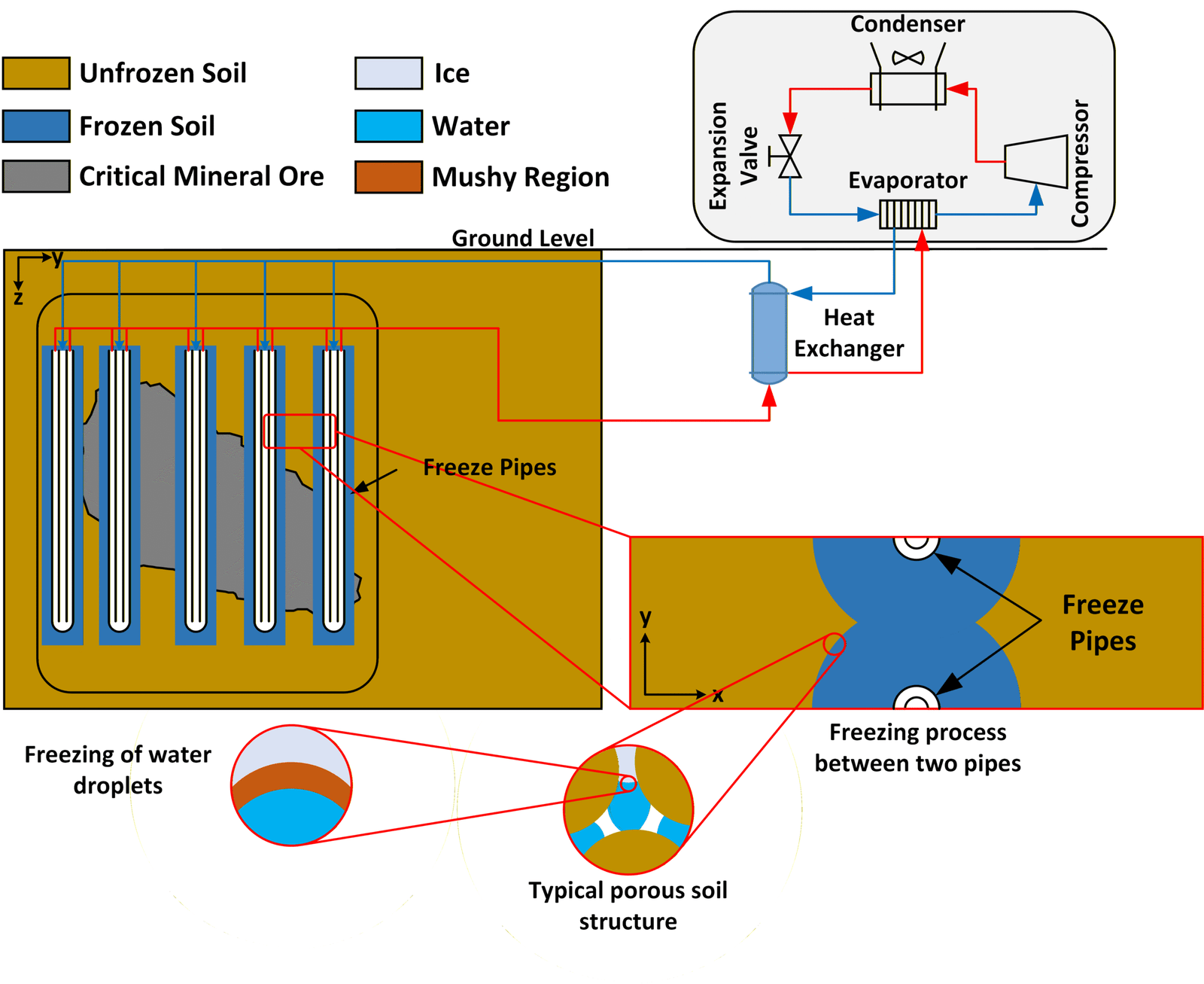
The AGF Process is inherently a multi-scale process, ranging from system-level operation into a pore-scale process of transforming pore-water into pore-ice