At EEE Lab we conduct interdisciplinary research focused on advancing sustainable energy and infrastructure solutions for mining and other energy-intensive sectors. Our work spans artificial ground freezing and permafrost stabilization, hydrogen integration in underground systems, mine ventilation and heating optimization, and broader decarbonization strategies. We combine controlled experimentation, climate-representative testing, and high-fidelity numerical modelling to investigate coupled thermal and fluid processes in subsurface environments. Through this integrated approach, the lab develops practical technologies and engineering frameworks that enhance energy efficiency, strengthen infrastructure resilience, and support low-carbon industrial operations.
Artificial Ground Freezing
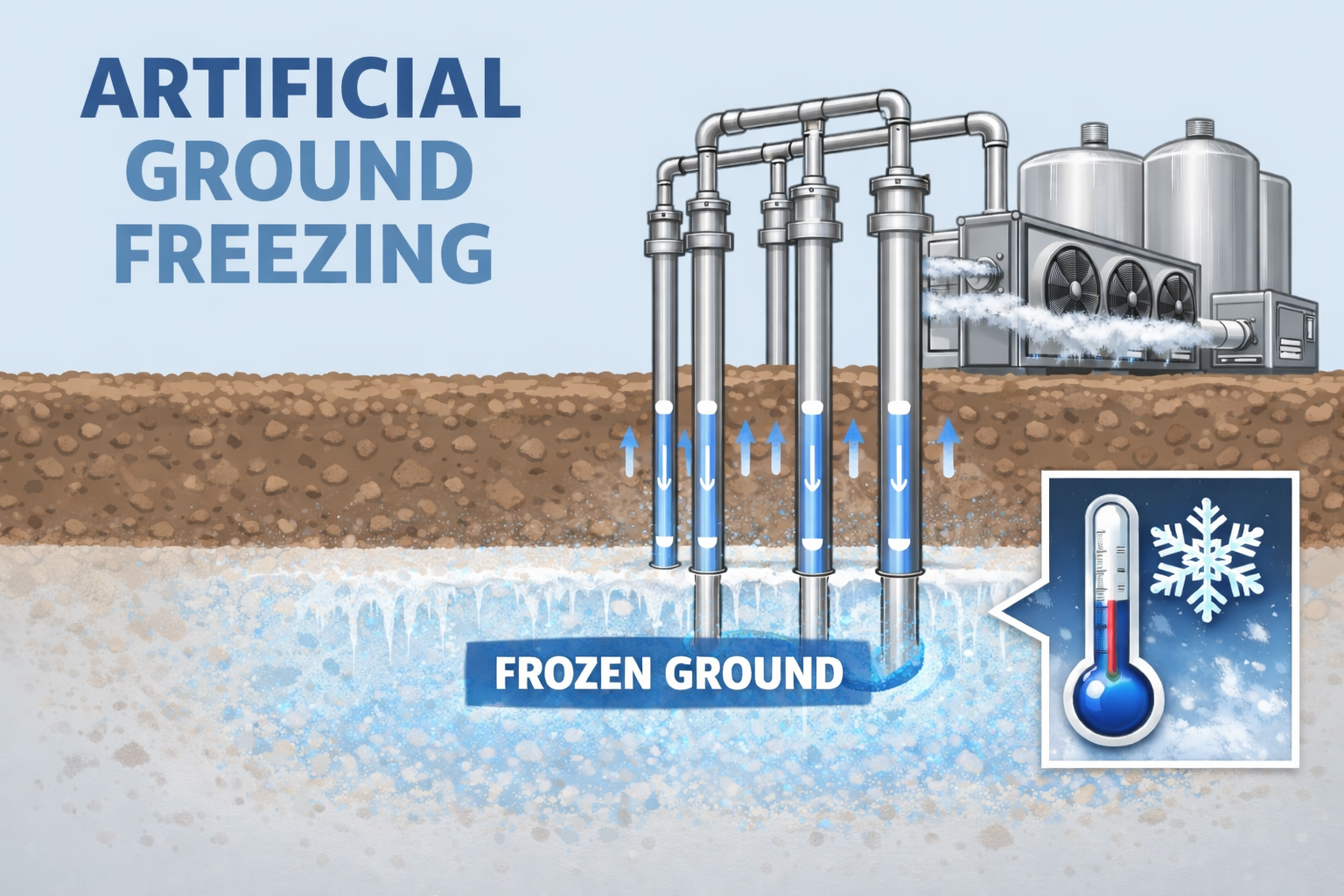
Permafrost underlies nearly 50% of Canada’s landmass, forming a pivotal foundation for both mining operations and northern infrastructure. For decades, the permanently frozen ground has supported critical assets in northern Canada such as mine sites, tailings dams, roads, pipelines, airstrips, hazardous-waste sites, and community housing. Its progressive and accelerated thawing brings extensive consequences across vital facets, including structural integrity, economic viability, and the long-term sustainability of northern development.
Mining operations are not exempt from this threat; frozen tailing dams rely heavily on permafrost for strength and impermeability. Permafrost thawing jeopardizes the stability of these structures, increasing the risk of collapse and the uncontrolled release of tailings into surrounding landscapes and freshwater systems. The challenge is clear, as permafrost continues to thaw under climate change, the threats to infrastructure stability, economic sustainability, and environmental safety will intensify.

The AGF Process is inherently a multi-scale process, ranging from system-level operation into a pore-scale process of transforming pore-water into pore-ice
Hydrogen in Mining
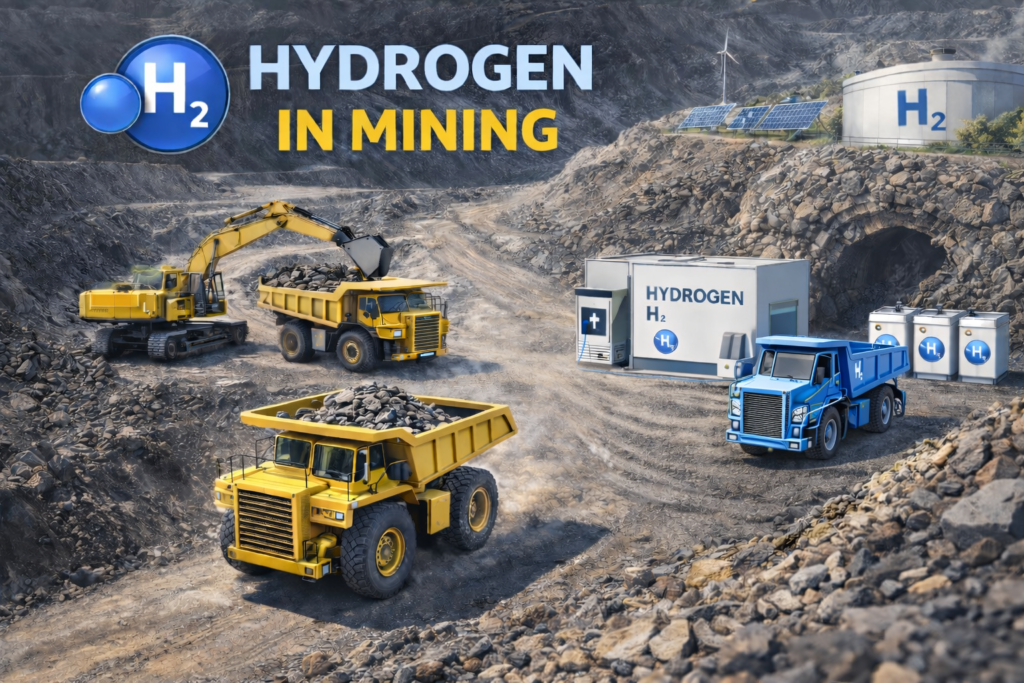
The mining industry remains one of the most energy-intensive industrial sectors, with operations heavily dependent on carbon-intensive fuels and high-cost energy systems. Within the EEE Lab, research advances hydrogen-driven technologies, engineering specifications, and deployment frameworks that enable integration with existing diesel-based equipment and ventilation infrastructure. Efforts span experimental investigations, high-fidelity numerical modelling, and system-level risk assessment to evaluate safety, technical feasibility, operational performance, and environmental impact. This work addresses the complex multi-scale and multi-physics challenges associated with hydrogen adoption in underground environments. Outcomes support the decarbonization of mine energy systems, reduction of operating costs, and the development of emerging hydrogen value chains for the mining sector. Collectively, these contributions position hydrogen as a viable pathway toward low-emission, resilient, and future-ready mining operations.

Projected hourly cost trends for hydrogen, natural gas, and carbon emissions based on 2030 estimates. Costs include delivery and are calculated using assumed values for each energy source and emission output.
Thermal Energy Storage
Canada has enormous potential for sustainable thermal energy storage/extraction that is broadly distributed across the country. For instance, Canada’s west coast forms part of the Pacific Ring of Fire, which has promising resource for developing a sustainable electrical generation. Despite having an abundant potential, the fundamental R&D and the utilization of these energy-related technologies are scarce.
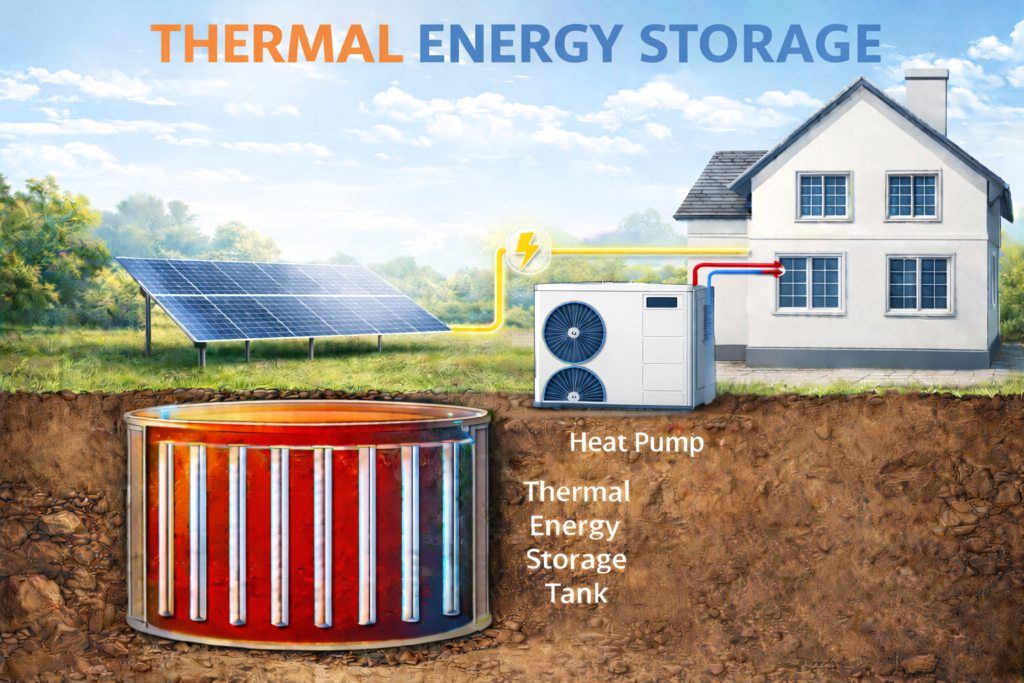
Ground-coupled geothermal energy systems are typically used to augment the heating and cooling loads for residential, agricultural, or industrial applications. The hot or coolth energy is stored in the Earth’s vast-volume, high-pressure subterranean to be used later. In certain circumstances, the system could be located next to a large water body (river or lake) or near an aquifer, which make them subject to a high-pressure groundwater flow that could sweep away most of the stored energy. Here, we re-evaluate the design of the conventional ground-coupled geothermal energy systems and propose novel concepts of selective ground freezing to sustain the stored energy and improve the overall system efficiency. The idea is to create an impervious frozen barrier that suspends the groundwater flow.

A hybrid geothermal energy storage and heating system integrating photovoltaic–solar thermal collectors with a ground-coupled heat exchanger.
Microfluidic Devices
The growing demand for safer, cleaner, cheaper, substantially smaller, and more energy-efficient processes has boosted the interest in the development of Process Intensification (PI). The latter is a term that is defined by various scientists as a description of the revolutionary approach of miniaturizing the size of any chemical, bio-analytical, or pharmaceutical processes to achieve a certain production objective. The PI approach aims to replace the old, inefficient processes with new, high-performance ones based on products that could not be produced using conventional technologies.
Among other processes in microfluidic systems, the mixing of multiple miscible fluids is the core link in these integrated operations, where micromixers are usually incorporated as crucial components for achieving uniform and rapid mixing. Micromixers offer several advantages, over the counterpart macro-mixing devices, including compact design, high area-to-volume ratio, short mixing time, low risk of contamination, simpler process control, and ease of fabrication.

Contours of the mass fraction for the plain and twisted Gyroid micromixers at equally-spaced six stages along the mixing channel